Customizable Skateboard Decks: The Future of Print on Demand
Intro
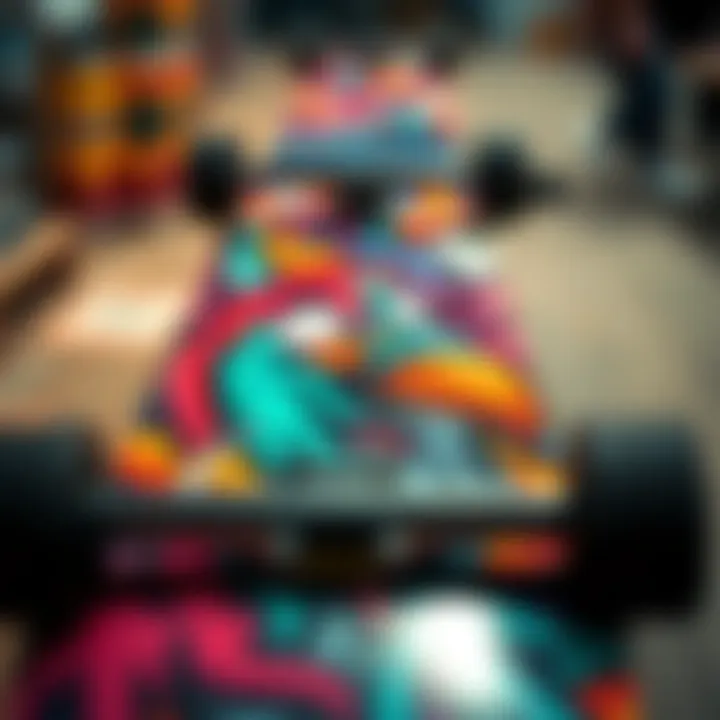
The landscape of skateboarding is ever-evolving, making way for new technologies and creative expressions. One of the most exciting developments in recent years is the advent of print on demand skateboard decks. This innovative approach allows skaters to personalize their boards to a degree that was previously unimaginable. Custom designs can range from unique artwork to personalized messages, reflecting the individuality of each rider. Through this article, we’ll delve into what print on demand skateboard decks mean for both skaters and designers, examining the playful intersection of art and function.
Skateboarding Techniques
Beginner Tricks and Tips
When it comes to skateboarding, mastery of techniques can take time and practice. For beginners, focusing on a few foundational tricks is crucial to building confidence and skill. Starting small helps ease anxiety and allows one to gradually progress. Here are some tricks that are commonly suggested for novices:
- Ollies: The fundamental trick that every skater should learn. It forms the basis for many other moves.
- Shuvits: A great way to develop your board control without having to do more complex maneuvers.
- Kickflips: Once comfortable with ollies, this trick introduces the concept of flipping the board.
When practicing these steps, safety gear is essential. Wear a helmet, knee pads, and elbow pads to ensure that you can learn without fear of injury.
Advanced Maneuvers and Strategies
For those who have moved beyond the basics, the world of skateboarding opens up to a plethora of intricate moves. Advanced tricks not only showcase skill but often require creativity. Here are some of the more challenging maneuvers skaters often strive to master:
- 360 Flips: Combining a kickflip with a 360-degree spin can wow any crowd. It demands precision and timing.
- Nose Blunts: A blend of technicality and style that showcases a skater’s balance and board control.
- Smith Grinds: Highlighting the grinds category, this trick requires a good grasp of balance on the edge of a rail or ledge.
When advancing, it’s helpful to understand the context of your environment. Skating in parks versus street skating drastically impacts the techniques you might want to perfect. Understanding the dynamics can not only improve performance but also increase the enjoyment of skating.
Skateboarding Culture
Fashion Trends in Skateboarding
Skateboarding isn’t just about the tricks; it’s a lifestyle, and clothes play a big role in self-expression. The evolution of skate fashion reflects a blend of utility and artistry, ranging from baggy pants to graphic tees. Notably:
- Sneakers: Brands like Vans and Nike SB have crafted shoes specifically designed for skating, emphasizing grip and durability.
- Brands: Statements are made not only with tricks but also with logo tees and caps from skate brands. The connection between skaters and brand identity reflects a deeper cultural engagement.
Events and Community Spotlights
Communities around skateboarding thrive on events like competitions and local meetups. These gatherings foster camaraderie and allow skaters to learn from one another. Not to mention, events like X Games and Street League Skating have become platforms for showcasing talent on a global scale.
Outside of competitions, local skate parks often host events that draw together skateboard enthusiasts. These informal gatherings provide not just a chance to skate but to exchange ideas, techniques, and designs, further solidifying the bond between skaters.
"The skateboard is a tool for creativity. It speaks the language of freedom and brings communities closer."
As we continue to unravel the influence of print on demand skateboard decks in this article, it becomes evident that what lies beneath the surface is a rich tapestry of culture, creativity, and progression. Skaters, artists, and technologists are all contributing to this innovative frontier, making it an essential topic for anyone interested in the future of skateboarding.
Understanding Print on Demand
Print on demand (POD) is more than just a trendy buzzword; it depicts a revolutionary approach to manufacturing, particularly in the niche of skateboard decks. Its significance lies not just in convenience but also in how it reshapes creativity and sustainability in skate culture. The method allows anyone, from individual artists to established brands, to bring their ideas to life without the burden of large-scale production requirements. This democratization of design tells skateboarders that their voices matter—they can craft something truly unique, tailored to their tastes.
Definition of Print on Demand
At its core, print on demand is a digital printing technology that enables product customization. In layman's terms, it means you can create a skateboard deck right from your computer and have it produced on an as-needed basis. Instead of maintaining large inventories, retailers or developers produce items only once they are ordered. This not only streamlines the process but also minimizes waste, making it attractive for environmentally conscious consumers.
The beauty of POD lies in its flexibility. Customers can customize graphics, colors, and even shapes, which gives rise to a wide spectrum of creative possibilities. Whether it’s a hand-drawn illustration or a high-resolution photograph, the process can accommodate a myriad of designs, enabling skaters to showcase their personalities through their boards.
Origin and Evolution
Originally, the notion of print on demand emerged from the traditional publishing world—an industry grappling with overproduction and wastage. This transformative idea found its way into various sectors, including apparel, art, and now, skateboarding. The timeline reflects a gradual shift towards a more personalized product offering, responding to changing consumer preferences.
In the early days, the quality of POD items could be hit or miss, often leaning towards the low end. However, technological advancements in printing and materials have elevated the standard significantly. Today, we're looking at high-quality graphics and durable decks that withstand the rigors of skateboarding culture.
Within the skateboarding realm, POD has sparked creativity among amateur and professional designers alike. Events and online platforms that facilitate these customizations have made it easier than ever for skaters to express themselves beyond just tricks and stunts on their decks. With a virtual marketplace at their fingertips, skaters no longer need to be stuck with generic designs that might not resonate with their styles.
"Print on demand allows for creativity in a space that, until recently, valued conformity above personal expression."
As POD continues to gain traction, retailers must adapt to meet these shifting demands. By embracing print on demand techniques, the skateboard community is paving the way for a future that harmonizes artistic expression with sustainable practices, thus ensuring that skateboarding culture is not only preserved but also nurtured in an innovative landscape.
The Appeal of Customization
Customization has woven itself into the very fabric of skateboarding, serving as a bridge connecting personal style with cultural identity. In the realm of print on demand skateboard decks, the allure of creating something that is distinctly yours is not just a trend; it’s a revolution. Skaters today are no longer mere participants in a sport. They are artists, storytellers, and innovators who express themselves through an array of designs. This goes beyond just selecting colors; it’s about crafting an identity and making an impact.
When you consider the options available in design, it becomes clear how advantageous it can be for both skateboarders and retailers. Customization fosters engagement and drives sales by offering products that reflect individual preferences. Additionally, the emotional connection formed during the design process can build lasting loyalty to specific brands or platforms, all while empowering creators to forge their unique paths.
Beyond the ability to personalize, customization also beckons further contemplation. It raises questions of authenticity and originality. As a skateboarder, owning a deck that embodies your artistic vision adds a layer of depth to the experience. The importance of knowing that the skate deck you ride isn’t something you can find in the local shop creates a sense of exclusivity.


Customizing your skateboard deck can be likened to wearing a badge. It’s not just wood and graphics; it's a part of who you are.
Personal Expression in Skateboarding
Skateboarding is deeply ingrained in self-expression. Each skater brings their personality to the scene, whether it’s through tricks, attire, or their choice of board. Print on demand skateboard decks offer the means for full personal expression. By configuring colors, images, and even text, skaters create canvases that translate their ethos into visual form. Consider the impact of a deck adorned with personal artwork, a favorite quote, or reflective imagery. Such features make the board more than equipment; it transforms it into a narrative.
Moreover, this customization can be vital for younger skaters, who are often forming their identities. A uniquely designed skateboard can serve as a powerful tool to foster confidence and self-assuredness. Rather than conforming to mainstream designs, each skater has a platform to voice their individuality. This evolving culture presents a stark contrast to traditional skate shops, where choices are often limited.
As customization continues to flourish, expect to see various trends emerging. For instance, using bold patterns or nostalgic icons can symbolize belonging to certain skate subcultures, each with rich histories and traditions. The ability to create a distinct identity through skateboards fuels a sense of community, uniting diverse styles under the common goal of sustained self-expression.
Unique Designs and Artwork
Art speaks the language of the soul, and in skateboarding, it’s no different. When engaging with print on demand skateboard decks, individuals aren't just seeking a product; they're pursuing an art form. Unique designs captured on a skateboard serve as a modern-day expression of street art. From minimalist aesthetics that evoke a sense of calm to vibrant graffiti-inspired patterns that electrify the senses, the potential is limitless.
Printing technology has also reached great heights, allowing for breathtaking detail and durability in customized designs. High-quality inks and substrates mean that the printed artwork maintains its vibrancy through wear and tear, effectively keeping the skater's vision alive. Think of it as fashion where the runway is the skate park—art is continually redefined as it intersects with the culture.
The collaboration between skilled artists and enthusiastic skaters is another realm worth exploring. Many platforms have made it easy for both parties to connect. Artists gain exposure, while skateboarders receive personalized pieces that echo their ideals. Platforms like Instagram and Behance are awash with creative designs waiting to inspire someone to place them on their next deck. Moreover, some brands even feature artist series, empowering creatives and fostering emerging talent.
Technological Advancements
Technological advancements have become a crucial pillar in the evolution of print on demand skateboard decks. The intersection of art, design, and technology enables artists and skateboarders alike to access a world of customization previously unimagined. Let’s dive into the printing techniques and the materials used, as well as the quality control measures that ensure the final product meets the high standards of the skating community.
Printing Techniques Used
The various printing techniques available for custom skateboard decks are like a buffet for creativity. As quite a few options exist, it really boils down to what the artist wishes to achieve. Here are some commonly used methods:
- Digital Printing: This method allows for vibrant, high-resolution images that can capture intricate details. The process involves transferring the digital image directly onto the deck using inkjet technology. This is not only efficient but also affordable for short runs, making it perfect for individual artists.
- Screen Printing: Often considered the gold standard for skateboard graphics, screen printing involves pushing ink through a mesh stencil onto the wood. This technique provides incredible color density and durability. It's a favorite for large batches and can produce striking, bold designs.
- Heat Transfer: Involves printing designs onto a special transfer paper and using heat to fuse the design onto the deck. While it is less common for professional skateboards, it works well for small-scale projects and personal designs.
Each technique has its own charm and application, reflecting on the quality of the finished skate deck.
Materials and Quality Control
When it comes to skateboard decks, the materials used are of utmost importance. Quality often speaks louder than words in the skateboarding scene, and this is where manufacturers strive to excel.
- Wood Choices: Most skateboard decks are crafted from Canadian maple due to its strength and resilience. However, some brands also experiment with bamboo and birch, which offer unique flexibility and lighter weights. The choice of wood affects not only the feel of the deck but also durability and pop.
- Graphics Coatings: The top layer of a skateboard deck is typically coated with a clear resin that protects the graphics and provides a smoother finish. This coating aids in longevity, keeping the artwork vibrant even after repeated impacts.
Quality control is where art meets science in skateboard production. Each step in the manufacturing process is inspected, from the selection of raw materials to the drying and curing of prints.
A well-implemented quality control system ensures that all finished decks meet rigorous standards, providing skaters with the reliability they demand. As the saying goes, "You get what you pay for," and in the realm of custom skateboard decks, this holds particularly true. Quality checks can mean the difference between a deck that performs as expected and one that falters in the heat of the moment.
In today’s technology-driven world, the synergy between printing techniques, materials selection, and strict quality control practices empowers both artists and skaters, paving the way toward an exciting future that encourages creativity and self-expression.
"Innovation is the ability to see change as an opportunity – not a threat." - Anonymous
For further insights on advanced printing techniques, one can check reputable educational sites like Britannica or forums like Reddit where communities share expertise. More information on skateboard manufacturing materials can be explored at various wood and material science sites.
The Design Process
The journey from concept to creation in the realm of print on demand skateboard decks is an intricate dance involving design, creativity, and technical execution. This process is crucial not only for ensuring that the final product resonates with the intended audience but also for maintaining the distinctiveness that sets these custom decks apart in a crowded market.
Choosing the Right Platform
When embarking on this design adventure, one of the first considerations is selecting a platform that aligns with the designer’s needs and objectives. Different e-commerce platforms offer varied functionalities for customizing skateboard designs. For instance, Shopify provides an intuitive setup for businesses, allowing seamless integration of print on demand services like Printful or CustomCat. This sort of integration streamlines inventory management and printing operations, making it easier for designers to focus on what they do best: creating.
In contrast, platforms like Etsy cater to individual artisans wanting to showcase their custom designs. Etsy benefits from an existing community eager for unique products, thus providing artists and retailers with a built-in audience. The choice hinges on factors like the extent of customization desired, the audience targeted, and the kind of artistic expression that one hopes to promote.
Collaboration with Artists
The design of a skateboard deck often thrives on collaboration, particularly when artists join forces with brands to create that unique aesthetic. This partnership can introduce fresh ideas and styles that invigorate designs that might otherwise feel stale or uninspired.
Involving artists, either local talents or seasoned pros, expands the creative palette. It allows brands to tap into various art movements, street influence, and current trends. For instance, integrating graffiti art or digital illustrations can produce a deck that’s not just functional but also a vibrant canvas reflective of street culture.
Moreover, collaboration fosters a sense of community within skate culture; the artist gains exposure and credibility while brands benefit from unique offerings that resonate with customers. This synergistic relationship can often lead to limited-edition releases, creating urgency and enhancing desirability for collectors and enthusiasts alike.
Creating the Final Design
Once the right platform has been chosen and collaboration established, the focus shifts to finalizing the deck design itself. This step is defining; it embodies the culmination of creative energy and technical skills. The final design is where all elements—art, colors, shapes—come together to convey a message or evoke a feeling.
Using tools like Adobe Illustrator or CorelDRAW, designers can experiment with various visual styles and color schemes, ensuring that the artwork complements the skateboard's shape and size. A well-thought-out design manifests not only visually but also in terms of functionality—taking into account how graphics will survive wear and tear during typical use.
Additionally, feedback during this phase is essential. Engaging potential customers or community members through social media could provide valuable insights about what appeals to them or what they want to see. Once a consensus is reached, the design heads to the printing setup where precision is vital. Special attention is given to colors matching the original vision, ensuring the final product delivers on the promise of quality and artistry.
"In design, limitations often breed creativity, forcing you to innovate and adapt."
Navigating through the design process of print on demand skateboard decks not only illustrates the craft of artistry but also underscores the evolving landscape of skate culture. Each step reflects a deliberate choice: choosing platforms, collaborating with artists, and meticulously crafting designs that resonate with the heart of the skater community.
Market Trends and Insights
Understanding the market trends and insights surrounding print on demand skateboard decks is crucial for grasping their place in the evolving landscape of skate culture. The adaptation of customizable skateboard decks stems not only from skaters' desire to express individuality but also from broader shifts in consumer behavior. In the face of rapid technological advancement and changing demographics, business models are reshaping themselves to respond to the market’s needs, and skateboard manufacturing is no different.
Growth of Custom Decks
The growth of custom skateboard decks can be attributed to several overlapping factors. Firstly, skateboarding as a sport has seen increased participation globally. As skateboarding moves toward the mainstream, a greater number of enthusiasts seek personalization in their gear. The boom of e-commerce platforms that prioritize print on demand services has catalyzed this growth. With minimal initial investments and no overhead costs tied to traditional inventory management, artists, and retailers can now offer diverse designs, catering specifically to niche audiences.
Moreover, skateboards are not just functional items, but also canvases for artistry. The ability to create one's own deck like a piece of art makes it an appealing choice. Customers often turn to platforms that allow them to customize their boards with graphics that resonate with their personal stories or the culture they identify with. This is not merely about having a unique design, but about making a statement through the art on their board.
Demographics of Buyers
Delving into the demographics of buyers reveals a heterogeneous group that spans age, gender, and cultural backgrounds. Recent studies indicate that youths between the ages of 18 to 34 are among the largest consumer segments. However, there’s a growing interest among older generations, who now embrace the culture that involves skateboarding, influenced by social media portrayals and nostalgia for their youth. Furthermore, there is a noticeable uptick in female skateboarders, reflecting a shift in perceptions and inclusivity within the skate community.
As skateboarding continues to bridge gaps across different social groups, understanding buyer demographics becomes essential for businesses. For instance, marketing strategies can be tailored based on whether the focus is on hobbyists, serious athletes, or collectors of artistic skateboards. A solid grasp of these demographics allows brands to align their product offerings and promotional efforts effectively.
Influence of Social Media
Social media serves as a powerful catalyst in shaping trends in the skateboard industry. Platforms like Instagram and TikTok allow skaters to showcase their customized boards and their tricks, potentially connecting with a vast audience instantaneously. Skaters often share their creations, thus sparking interest and prompting others to craft their own unique styles. This visibility enhances the appeal of customization and fosters a community where artistic expression flourishes.
Additionally, skate brands and artists use social media to launch campaigns, share tutorials, and engage with their audience. The agile nature of these platforms means that trends evolve rapidly, catching the eyes of both brands and consumers. As a result, collaborations often arise between popular skaters and artists, creating buzz and expanding the reach of custom skateboard decks.
"The profound influence of social media offers skateboarders a voice, allowing them to redefine skate culture while embracing innovation in design."
Understanding the interplay of these elements—growth, demographics, and social media—in the realm of customizable skateboard decks not only highlights current market tendencies but also prepares skaters, retailers, and creators for the possible shifts in the future of skateboarding.
Environmental Considerations
When diving into the world of print on demand skateboard decks, it’s crucial to consider the environmental impact that accompanies this innovative approach. As the skateboarding community becomes more aware of its ecological footprint, these deliberations are ever more pressing. Print on demand offers unique opportunities for sustainability while also posing challenges that need tackling.
Sustainability in Printing
Sustainability in the printing process is paramount for reducing the ecological impact of skateboard decks. Unlike the traditional mass production methods that often lead to excess inventory and waste, print on demand allows for a more efficient manufacturing model.
Using eco-friendly inks and materials is becoming the norm for businesses engaged in this space. For instance, companies are now experimenting with water-based inks that are less harmful to the environment. Moreover, responsibly sourced wood or recycled materials for decks reduces the demand for fresh raw resources. The use of digital printing also minimizes energy consumption compared to conventional methods.
- Advantages of sustainability in print on demand:
- Reduces waste linked to overproduction.
- Limits the carbon footprint by utilizing renewable materials.
- Supports local economies by encouraging smaller businesses, which often adopt greener practices.
Ultimately, a focus on sustainability not only benefits the planet but can also appeal to a growing demographic of eco-conscious consumers looking for products aligned with their values.
Waste Reduction Strategies
In a world where resources are drained at an alarming rate, waste reduction is a critical conversation in the realm of skateboarding products, especially with print on demand. This business model naturally aligns with strategies that aim to minimize waste by printing items only when they’re needed.
Implementing several strategies can further enhance waste reduction:
- On-Demand Production: Products are created as orders are received, which drastically cuts down on unsold inventory.
- Efficient Design Practices: By optimizing designs to fit larger printing areas or using multi-functional graphics, manufacturers can decrease material wastage.
- Recycling Programs: Some companies have initiated take-back programs, encouraging customers to return their old decks for recycling. This can lead to a closed-loop system that respects the environment.
- Digital Proofing: Utilizing digital proofs before production can help avoid misprints, reducing material loss during the printing process.
"Adopting green strategies is not just good for the planet; it’s becoming a badge of honor in the skating community.”
By staying vigilant in waste reduction efforts and investing in sustainable practices, the skateboard industry can build a future that respects both the art of skating and the planet it relies upon.
Influence on Skate Culture
The emergence of print on demand skateboard decks is reshaping the landscape of skateboarding culture in significant ways. Customizable decks allow skaters to express their unique identity and style, forging a deeper connection with the sport. Not only does this trend cater to individual creativity, but it also strengthens community bonds among skateboarders, as everyone can showcase their artistic visions. The influence of this customsation is profound, encouraging skaters to be a part of a supportive community while also challenging the traditional boundaries of skateboarding.
Changing Perceptions of Skateboarding
Skateboarding has come a long way from its roots. Once viewed as a fringe activity or even a form of delinquency, it's now embraced as an art form and a legitimate sport. The introduction of print on demand decks contributes significantly to this evolving perception. People who might have never considered skateboarding are drawn in by the artistic possibilities and the personal storytelling that custom decks can represent.
In neighborhoods and cities worldwide, skaters now push the boundaries of conventional design. Instead of opting for mass-produced, generic boards, they seek personalized options that reflect their personality. This transformation isn’t just about aesthetics; it’s about integrating individual narratives into one’s ride. It’s a culture shift that promotes inclusivity, encouraging newcomers and seasoned skaters alike to experiment and find their voice on a skateboard.
Take, for instance, a local skate shop that collaborates with talented local artists. Through this partnership, they provide a platform for these artists to showcase their work on skateboard decks. This model not only fuels creativity but also empowers the artists within the community to gain visibility while enriching the skateboarding world.
Events and Competitions Featuring Custom Decks

The rise of customizable skateboard decks has led to innovative events and competitions that revolve around this artistic freedom. Skate contests now often feature categories that emphasize design, showcasing not only skating talent but also the artistry of the boards used.
Consider events like the Battle at the Berrics, where skaters often present their own custom decks during the competition. Not only do these events promote high skills, but they also increase awareness of artistic talents within the skateboard community. Additionally, online platforms such as Instagram and Reddit encourage users to share their custom decks, generating excitement and interest.
Such competitions add a new layer to the skateboarding experience. Participating skaters don’t just compete in terms of skill; they compete to tell a story and present their individual perspectives. This way, custom deck events have become a celebration of both skateboarding and artistic expression, transforming how spectators perceive and engage with the sport.
"Customization in skateboards isn't just a trend; it's the heartbeat of the culture — where art meets athleticism."
As skateboarding continues to evolve, the confluence of art and sport is likely to grow even more intertwined, firmly establishing print on demand skateboard decks as a prominent feature in the skate culture narrative.
Potential Challenges
As the world of print on demand skateboard decks grows, it brings along a set of challenges that must be addressed. These challenges, while significant, also pose benefits when managed correctly. Recognizing and navigating these obstacles is vital for skaters, retailers, and designers who desire to establish a foothold in this evolving market.
Quality Versus Quantity
In the race to provide custom decks, the old adage "you get what you pay for" rings true. As the demand for print on demand skateboard decks surges, many companies may feel pressure to produce a high volume of designs at a speed that could compromise quality. Striking a balance between these two aspects is crucial.
For consumers, a low-cost, high-volume deck may sound attractive, but it can lead to subpar performance and durability. High-quality materials and meticulous printing techniques translate into decks that not only withstand the rigors of skateboarding but also deliver a unique aesthetic. Thus, consumers should remain vigilant, seeking out stores or brands that prioritize quality over sheer numbers.
- Durability Issues: Cheaper materials can affect the life of the skateboard.
- Print Clarity: High-quality prints ensure the artwork looks sharp and vibrant.
- User Satisfaction: A well-made deck leads to happier customers and repeat business.
The challenge lies in the ability of companies to maintain stringent quality control standards while still meeting the demand. This balance can be a tough nut to crack, leading to potential fallout not only for the businesses involved but also for the skaters who live to ride.
Market Saturation Risks
Another pressing issue arises from the oversaturation of the market with print on demand products. When everyone and their cousin jump on the trend, it can water down the uniqueness of custom skateboards. Having too many similar deck designs flooding the market can dilute brands and make it hard for new entrants to carve their niche.
The competition can be brutal, and finding a unique selling proposition becomes imperative. This ultimately raises the stakes for quality and creativity in design. Businesses must differentiate themselves through innovative ideas, artistic collaborations, or unique materials. Otherwise, they risk being lost in the shuffle.
- Creative Exclusivity: Businesses need to hone in on unique artistic expressions.
- Price Wars: Competing solely on price can lead to negative impacts on profit margins.
- Customer Loyalty: Brand identity becomes key to fostering a loyal customer base.
A diverse and quality-focused offering can not only combat market saturation but can help to elevate the skate culture as a whole. Ignoring these challenges, however, could lead to a situation where the market becomes overcrowded and consumers lose interest.
"The best way to predict your future is to create it." - Peter Drucker
Future of Skateboard Decks
The future of skateboard decks is a vibrant canvas filled with potential, pushing the boundaries of both technology and artistic expression. As the world becomes increasingly digital, the art of skateboarding is evolving, merging tradition with innovation in captivating ways. Customizable skateboards are more than just a means of transportation; they are channels for personal expression, creativity, and individuality that resonate deeply with skaters. This section will cover crucial elements such as the integration of technology with art and the longevity of print-on-demand methodologies.
Integrating Technology with Art
In the realm of skateboard decks, creativity knows no limits. The pairing of technology and art is transforming how decks are designed and produced. Innovations in printing technology, like UV printing and dye-sublimation, allow for high-resolution, vibrant designs that used to be the stuff of dreams. When a skate deck is customizable, it isn’t just about stickers or paint – it’s about bringing the artistic vision of the skater to life in rich detail.
One compelling example is how digital artists are utilizing software tools to create designs that will appeal to niche markets. The ability to run limited editions or one-off designs fueled by intricate algorithms can turn a simple skateboard into a sought-after collectible. Moreover, advancements like augmented reality could potentially allow skaters to visualize their designs on the deck before it even hits the production line.
"Customization is changing the game. It’s about making something that’s uniquely yours and having it reflect your personality."
Thus, the future of skateboard decks inevitably intertwines with tech-savvy art, catering to a new generation of skaters looking to express their unique styles.
Long-Term Viability of Print on Demand
As the market for print-on-demand skateboard decks continues to gain traction, consideration of its long-term viability becomes essential. The adaptability of on-demand production models not only caters to the emerging trends but also solves various issues related to inventory management for retailers. Instead of stocking up on every design, retailers can offer a vast array of options without the overhead costs.
But the real question is, will this model sustain itself? For many, it is not just about immediate profits but rather shifting market preferences. Sustainability plays a crucial role; customers today are more environmentally aware. Print on demand can operate with a reduced carbon footprint by only producing what’s needed, thus lowering waste significantly.
Additionally, long-term partnerships with artists can enhance product lines, leading to mutually beneficial sustainability. Collaborations can foster a community vibe, drawing in collectors who are eager to support the artists behind the designs.
In summary, as skateboarding continues to evolve, embracing new technologies and sustainable practices will determine the success of print-on-demand skateboard decks and ensure that customization remains at the heart of this exhilarating sport.
End
The exploration of print on demand skateboard decks opens a pathway to understanding a rapidly evolving niche within the broader skateboarding culture. This article has unearthed the multi-faceted benefits of customization, showing how it allows skaters to express their individuality while simultaneously influencing market trends and environmental practices. Custom skateboard decks are not just about aesthetics; they represent a shift in how skaters view their gear—more than mere equipment, they are canvases for artistic expression and personal branding.
Good customization options tap directly into the heart of skateboarding's DIY culture, encouraging riders to craft decks that speak to their unique styles and stories. This level of personalization caters to a demographic increasingly seeking authenticity and originality, especially in a world where mass-produced items often dominate the market.
In considering the future of printed skateboard decks, the integration of technology and art stands out as a critical area for development. As techniques advance, and materials improve, we see greater accessibility for artists and entrepreneurs to make their mark. Thus, the relevance of this topic continues to unfold, crucial for skaters, retailers, and creators alike.
The ecological footprint is also vital. The move towards more sustainable practices highlights the need for the skate community to confront its environmental challenges head-on. Print on demand not only revolutionizes design but also brings the opportunity to reduce waste.
Recap of Key Points
- Customization and Individuality: Print on demand decks promote personal expression, letting skaters choose designs that resonate with their identity.
- Technological Influence: Advances in printing and materials are making customization easier and more accessible, enhancing the quality and reach of designs.
- Market Dynamics: Understanding buyer demographics and trends provides insight into the growing desire for unique skateboarding gear.
- Environmental Impact: The need for sustainability in production processes is pivotal in shaping the future of skateboards.
Final Thoughts on Customization
Customization is not just a trend; it’s an integral part of what skating represents. As skaters embrace the digital age, the ability to personalize decks changes the relationship between rider and board. This connection fosters a culture of creativity and self-expression, allowing each rider to feel a sense of ownership over their gear. In a sense, skateboarding becomes an art form in its own right.
Moreover, the flexibility offered by print on demand systems means that anyone, regardless of background or skill, can contribute to the culture. The potential for collaboration with artists adds an additional layer to this dynamic landscape, making it a fertile ground for innovation.
In summary, the future of skateboarding decks is a canvas, ready to be painted by the aspirations and identities of its riders. The interplay of technology, art, and environmental awareness showcases a vibrant community ready to set new standards.